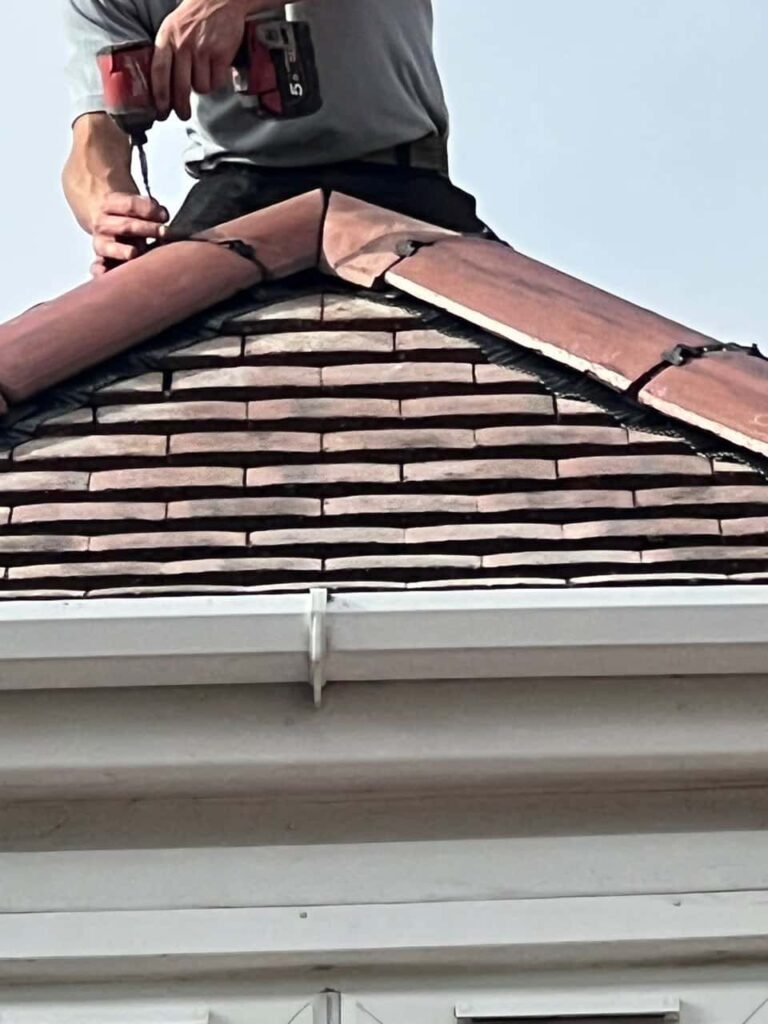
Not every roofing defect requires an emergency response. Some problems develop gradually and can be professionally assessed before suitable repair work is arranged. Others can quickly compromise the roof’s ability to protect the property, making prompt attention far more important.
The distinction usually depends on the severity of the problem, how quickly it is developing and whether the property is currently exposed to further water ingress or roofing materials have become unstable. A defect that initially appears relatively small can become urgent if it creates an open route for rainwater or begins affecting surrounding areas.
For property owners in Ravenshead, Nottinghamshire, recognising when a roofing problem has moved beyond routine maintenance can help prevent a manageable defect from developing into more widespread deterioration.
What Makes a Roof Repair an Emergency?
A roof repair generally becomes an emergency when the roof has suffered a significant or sudden loss of weather protection and delaying attention could allow the problem to worsen rapidly.
Examples can include active water ingress, substantially displaced roofing materials, sudden damage to an exposed section or a defect that is clearly deteriorating during poor weather.
The size of the visible problem is not always the best indication of urgency. A small opening in a vulnerable location can potentially allow considerable water penetration, while a larger but stable defect may not create the same immediate exposure.
Active Water Ingress Is a Clear Warning Sign
Water actively entering the property during rainfall should be taken seriously.
This may appear as dripping water, a rapidly spreading damp patch or moisture becoming increasingly noticeable across a ceiling or upper wall.
The external defect may not be directly above the visible internal problem.
Once water passes beneath tiles, slates or other roof materials, it can travel along the roof construction before becoming visible. Professional assessment is therefore important for tracing the likely entry point rather than assuming the internal symptom identifies the exact location requiring repair.
A Rapidly Spreading Damp Patch Can Indicate an Active Leak
A small historic stain and a damp patch that is visibly expanding are very different situations.
If moisture spreads during rainfall or becomes noticeably worse over a short period, water is likely continuing to enter the roof structure.
At this stage, simply monitoring the mark may no longer be appropriate.
Prompt investigation can help identify the cause while the affected area is more clearly defined and before continuing water ingress potentially reaches additional materials.
Missing Tiles or Slates Can Require Urgent Attention
Roof coverings rely on overlapping tiles or slates to manage rainfall.
When one or more units become completely displaced, the arrangement can be interrupted and materials beneath may become more exposed.
A missing tile or slate does not automatically mean that the roof has suffered extensive damage. However, the affected area should be examined to determine whether surrounding materials have also moved and whether the roof remains adequately protected.
The urgency increases when the opening is substantial or poor weather is allowing water to enter.
Loose Roofing Materials Should Not Be Ignored
Roofing materials that remain in place but appear visibly loose can also create an urgent situation.
Once a tile, slate or other component has started moving, further movement may occur. The condition of neighbouring materials also needs consideration because the visible defect may only represent one part of the affected area.
Homeowners should avoid climbing onto the roof to investigate loose materials.
A professional inspection can establish what has moved, why it has happened and whether the surrounding roof remains secure.
Sudden Damage Can Change Roof Performance Immediately
Some roofing problems develop gradually, while others appear suddenly.
A roof that was previously performing normally can develop an immediate weakness when materials become displaced or an important weathering detail is disturbed.
The important question is whether the damage has created an opening or reduced the roof’s ability to manage rainfall.
Where the answer is yes, professional attention should be arranged promptly rather than waiting to see whether internal dampness eventually develops.
Damage Around Flashing Can Become Urgent
Flashing helps protect vulnerable roof junctions where different surfaces or features meet.
If a significant section becomes loose, damaged or displaced, rainfall may gain access around the junction.
Because these areas can be difficult to diagnose from inside the property, the resulting dampness may initially seem unrelated to the flashing defect.
An assessment should consider both the visible flashing and surrounding roof materials so that the complete cause of the leak can be established.
Valley Problems Can Allow Significant Water Ingress
Roof valleys have an important drainage function because they receive water from adjoining roof slopes.
A serious defect within a valley can therefore become particularly noticeable during prolonged or heavy rainfall.
If the valley is no longer directing water effectively, moisture can potentially reach surrounding roofing materials and the construction beneath.
Active leakage associated with a valley should be professionally investigated promptly, particularly where the internal symptoms are increasing.
Ridge and Verge Damage Can Become More Serious
Ridges and verges are exposed to weather and can gradually deteriorate over time.
A small stable defect may initially be suitable for planned repair. However, if materials become significantly loose or sections begin moving, the situation can become more urgent.
The distinction is particularly important during unsettled weather.
An exposed or unstable section can deteriorate further, making early assessment useful for determining whether a localised repair can restore the affected area.
A Roof Problem Can Become an Emergency Without Being New
Not every emergency roof repair results from sudden damage.
A known problem can gradually worsen until it reaches a stage where the roof is no longer providing dependable protection.
For example, occasional moisture may develop into active dripping, or one slightly displaced roofing component may eventually move far enough to expose the layers beneath.
A change in the severity of an existing problem is therefore important.
If a defect is clearly becoming worse, continuing to monitor it may no longer be the appropriate response.
Recurring Leaks Deserve Closer Investigation
A leak that repeatedly returns after periods of rainfall can indicate that an underlying defect remains unresolved.
The leak may disappear during dry weather, but this does not necessarily mean the roof has recovered. It may simply mean there is temporarily no water entering through the weakness.
Recurring water ingress becomes more concerning when the affected area grows or the leak appears during increasingly moderate rainfall.
Rather than repeatedly responding to the internal symptom, the external cause needs to be identified.
Several New Problems at Once Can Increase the Urgency
Sometimes the overall pattern of roof deterioration is more important than one individual defect.
A homeowner might notice a new leak at the same time as displaced tiles and visible deterioration around another nearby roof detail.
These symptoms may be connected.
One underlying weakness can sometimes create several apparently different problems, particularly where water travels beneath the roof covering.
Assessing the complete affected section helps determine whether the situation involves several isolated faults or one more significant roofing problem.
Internal Ceiling Changes Should Be Treated Carefully
Roof leaks can sometimes lead to noticeable changes in ceilings.
If an area becomes heavily saturated, begins bulging or changes significantly over a short period, the space directly beneath it should be kept clear and professional assistance should be sought.
The immediate concern is not simply the visible stain.
The roofing defect allowing water into the property needs to be identified so that further ingress can be controlled and the extent of the affected area understood.
What Roofing Problems May Not Be Emergencies?
A roof can require attention without necessarily requiring an emergency repair.
Examples may include general weathering, minor deterioration that remains stable, an old dry internal stain or a localised defect that is not currently allowing water ingress.
These problems should not simply be forgotten.
Professional assessment can still be worthwhile because minor deterioration may be easier to manage before it develops further. However, the response can often be planned rather than treated as an immediate emergency.
Weather Conditions Can Change the Urgency
The same roofing defect can present different levels of urgency depending on current conditions.
A displaced roofing material during an extended dry period may not immediately produce internal symptoms. If prolonged rainfall begins before the defect is corrected, the roof may become considerably more vulnerable.
Wind-driven rain can also expose weaknesses that are less noticeable during ordinary rainfall.
This is why the condition of the roof itself should determine whether attention is required rather than waiting for substantial internal water damage to appear.
Emergency Attention Does Not Automatically Mean Major Roof Work
An urgent roofing problem does not necessarily mean that the entire roof requires extensive repair or replacement.
A clearly defined defect may still be suitable for targeted repair if surrounding materials remain in sound condition.
The purpose of an emergency assessment is to establish what has happened, identify the affected area and determine what is required to restore dependable protection.
At Ravenshead Roofing Repairs, we focus on the actual condition of the roof rather than assuming that an urgent problem automatically requires unnecessary work.
Temporary Protection and Permanent Repair Are Different
In some emergency situations, the immediate priority may be preventing the affected area from becoming further exposed.
The permanent repair should still be based on an accurate understanding of what has failed.
This is particularly important where damage affects several materials or where poor weather makes the full condition difficult to establish immediately.
The objective should ultimately be to correct the underlying defect rather than relying on measures that only address the immediate symptom.
Finding the Cause Remains Essential
Speed matters during an emergency, but so does accurate diagnosis.
Replacing one visible damaged component may not resolve the problem if water is actually entering from another location. Similarly, an obvious slipped tile may be part of a larger area of movement.
A professional assessment considers the visible defect, surrounding roofing materials and the pattern of internal symptoms.
This helps ensure that the repair addresses why the roof has lost its weather protection rather than simply treating what is easiest to see.
When Should You Arrange Prompt Professional Attention?
Signs that a roofing problem may require urgent assessment include:
- active water entering the property
- damp patches spreading rapidly during rainfall
- missing or substantially displaced tiles or slates
- visibly loose roofing materials
- sudden damage that leaves part of the roof exposed
- significant problems around flashing or roof junctions
- a recurring leak that has suddenly become worse
- several new roofing defects appearing together
- substantial changes to an internal ceiling following water ingress
The presence of these signs does not determine how extensive the repair will be. It indicates that the roof should be assessed promptly so the cause and extent of the problem can be established.
Why Early Action Can Keep the Problem More Manageable
A roofing defect can affect more than the component where it first develops.
Once rainfall gains access beneath the covering, moisture may reach surrounding materials that were previously performing correctly. Likewise, loose roofing components can potentially affect neighbouring areas if movement continues.
Prompt attention provides an opportunity to identify and contain the weakness before it becomes more widespread.
For homeowners in Ravenshead, Nottinghamshire, this is one of the main reasons not to delay when a roof has clearly suffered an immediate loss of protection.
Professional Assessment Provides a Clearer Picture
From ground level or inside the property, it can be difficult to judge how serious a roofing problem really is.
A dramatic internal leak may originate from a relatively localised external defect, while a small visible issue may indicate more widespread deterioration within the surrounding roof.
Professional assessment provides the context needed to distinguish between these situations.
Ravenshead Roofing Repairs can assess the affected section, investigate the likely cause and determine an appropriate repair approach based on the actual condition of the roof.
Conclusion
A roof repair becomes an emergency when the defect creates an immediate or rapidly developing risk to the roof’s ability to protect the property. Active water ingress, substantially displaced roofing materials, sudden damage and rapidly worsening leaks are all signs that prompt professional attention may be required.
Not every roofing defect is an emergency, and urgent attention does not automatically mean extensive work will be necessary. The important step is establishing what has failed, how much of the roof is affected and whether delaying repair could allow further deterioration.
If you have an urgent roofing problem at your property in Ravenshead, Nottinghamshire, contact Ravenshead Roofing Repairs. We can assess the affected area, identify the likely cause and recommend an appropriate repair to restore reliable roof performance.
Call us on: 01623 700 893
Click here to find out more about Ravenshead Roofing Repairs
Click here to complete our contact form and see how we can help with your roofing needs.